Episode Transcript
[00:00:00] Speaker A: From Riverside Health System. This is the Healthy youy Podcast where we talk about a range of health related topics focused on improving your physical and mental health. We chat with our providers, team members, patients and caregivers to learn more about how to maintain a healthy lifestyle and improve overall physical and mental health. So let's dive in to learn more about becoming a healthier you.
For nearly a century, prenatal care has followed the same model. But today that's changing. Women and families today are navigating more complex health needs, later pregnancies, busier lives and higher expectations of their care experience.
Today we are talking about how personalized obstetrics is is transforming prenatal care, creating a more flexible, supportive and patient centered journey from pregnancy through postpartum.
I'm Frankie Myers and this is Healthy U. Where we break down everyday health topics and introduce you to experts helping keep our communities well.
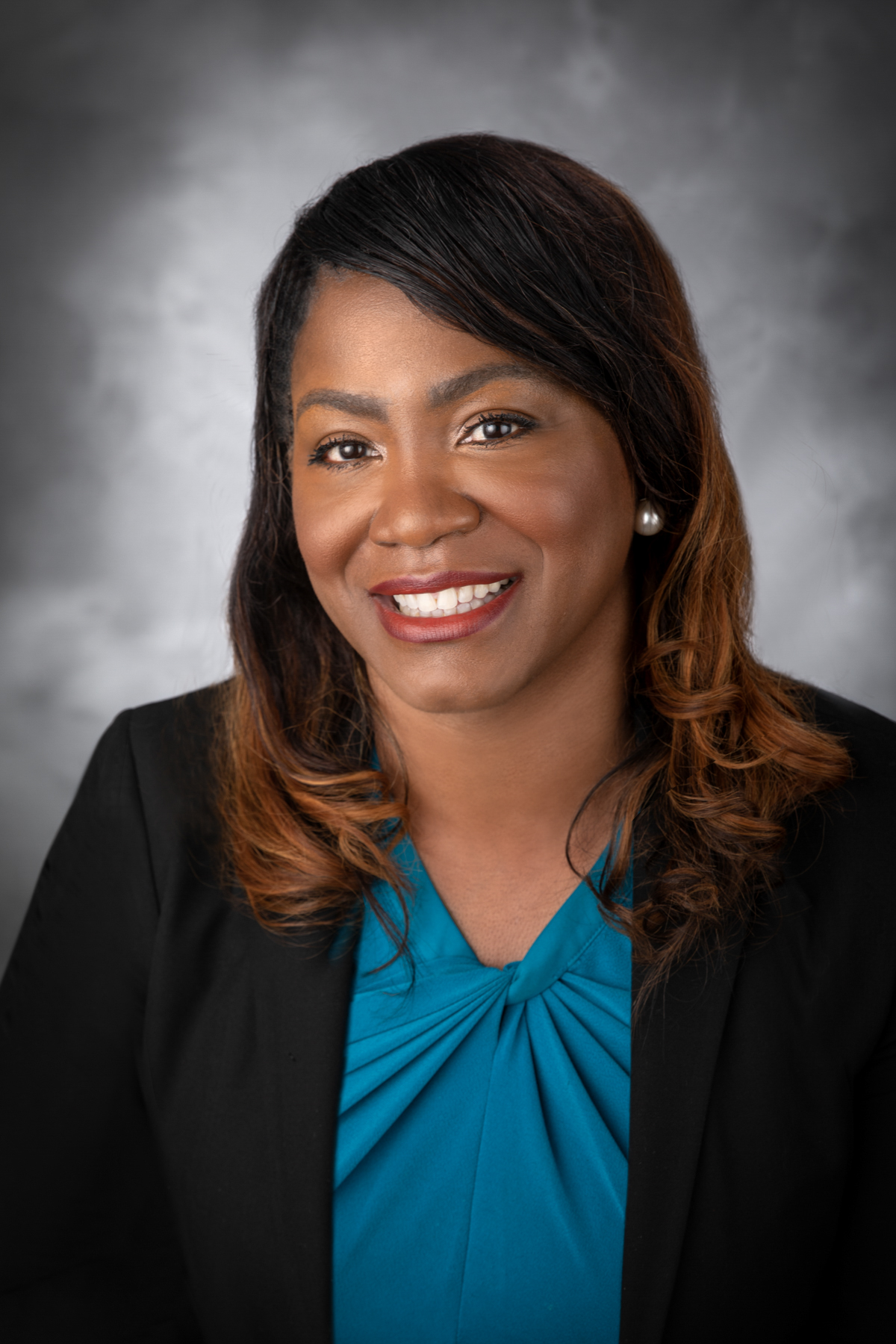
Joining me today is Dr. Joseph King, board Certified OBGYN with Riverside Partners in Women's Health.
Dr. Kim, welcome to the Healthy youy Studio.
[00:01:22] Speaker B: Thank you so much for having me. You finally got me in the trap.
[00:01:24] Speaker A: Finally got you. And I'm going to get you again.
[00:01:26] Speaker B: Yes, ma'. Am. Yes, ma'.
[00:01:27] Speaker A: Am.
[00:01:28] Speaker B: Thank you for having me though. I appreciate it.
[00:01:29] Speaker A: Yes, you're welcome.
To start us off, can you share a little bit about yourself and your role, how you ended up in healthcare and why conversations around prenatal care innovation are so important right now?
[00:01:44] Speaker B: Yes, I can definitely do that.
I actually just celebrated last week my 20th anniversary with Riverside.
[00:01:51] Speaker A: Oh, goodness.
[00:01:52] Speaker B: I came straight out of residency from East Carolina University in Greenville, North Carolina and joined Riverside.
[00:01:58] Speaker A: Okay.
[00:01:59] Speaker B: So I have been with the company for the entirety of my career so far.
[00:02:04] Speaker A: That says a lot. Yes.
[00:02:05] Speaker B: Married for 23 years.
[00:02:07] Speaker A: Okay.
[00:02:08] Speaker B: Four kids, one grandchildren. Oh, I can't believe.
[00:02:11] Speaker A: I know. You look too young for that.
[00:02:13] Speaker B: I know.
[00:02:14] Speaker A: Yes. Yes.
[00:02:15] Speaker B: One grandson. And you know, how I got into medicine is interesting.
One of the things that, as when I was younger, I always thought I wanted to do, but never thought I would be able to do.
[00:02:26] Speaker A: Okay.
[00:02:27] Speaker B: Attended North Carolina Central University for undergrad and had some very influential professors and advisors that convinced me that this was something that I could do.
And here I sit now going into medicine. I knew what I wasn't going to do.
[00:02:40] Speaker A: Okay.
[00:02:41] Speaker B: And it was OB GYN. But here I sit 20 years later as an OB GYN.
[00:02:46] Speaker A: So what caused that pivot?
[00:02:49] Speaker B: It was my first rotation on clinical wards and I like the diversity of the specialty.
Being in the office one day, being in the operating Room another day being on the labor deck another day delivering babies.
Taking care of women was much preferred over taking care of men because we're very, very difficult to manage and take
[00:03:08] Speaker A: care of, to say the least.
[00:03:10] Speaker B: Exactly. Self included.
[00:03:12] Speaker A: We navigate all of that for you.
[00:03:15] Speaker B: Women greatly appreciate it. Greatly appreciate it.
So that's kind of how I got into obgyn. And the reason why I feel like this conversation is important is because of what you said previously. This model has been the model since the 1930s.
And in 2026, we're still, for the most part, following that model, even though society has changed, needs have changed, patients have changed, and we just have not adjusted our approach. And it's time that we adjust that approach. And we're going to do the best that we can here at Riverside to make sure that we're adjusting to what the needs of the community are.
[00:03:55] Speaker A: Absolutely, absolutely. Absolutely. Great information.
So let's dive in. The traditional prenatal care model has remained largely unchanged, as you mentioned. What's no longer working about the traditional prenatal care model?
[00:04:10] Speaker B: I won't necessarily say that it's not working, but it's not working for everybody.
[00:04:14] Speaker A: Right.
[00:04:16] Speaker B: So what we need to do is meet patients where they are, where they are socially, where they are economically, where they are health wise, and just try the best that we can to optimize all those things, because we know that all those things have a significant impact on pregnancy outcomes and just meeting patients where they are trying to address as many of their needs as we can, again, so that we can have the best outcomes for our patients as possible.
[00:04:46] Speaker A: Absolutely, absolutely.
What are you also seeing as it relates to disparity and access? What are you seeing as it relates to that and outcomes across the communities that we serve?
[00:04:59] Speaker B: Well, you know, I like to think that here at Riverside that we do the very best that we can to take care of our patients. And I'll put our numbers up against anybody in the nation in terms of what our outcomes are in terms of preterm deliveries, complications of pregnancy, cesarean section rate, postpartum hemorrhage rates, blood transfusion rates, you know, all those numbers that we look at on a monthly, almost daily basis, I'll put our numbers up against anyone. But when you look at the nation as a whole, especially our underserved communities, our minority communities are just having much different outcomes than, than the majority of, of the country. And, you know, I've always been taught by family and friends that, you know, you always want to help the least
[00:05:46] Speaker A: of us, the least of them. Absolutely.
[00:05:47] Speaker B: So if we pull the least of us up, that's going to pull the rest of us up.
[00:05:50] Speaker A: Absolutely.
[00:05:51] Speaker B: So I think that that approach is. Is what we're working on and what we're working towards in our group and in our service line, and that's what we're gonna continue to do. And I think adjusting the prenatal care model and how we deliver this prenatal care is gonna be vital and very important in terms of trying to bridge that gap, address those disparities, and again, bring up those of us who are. Who are having a tough time.
[00:06:14] Speaker A: And one of the challenges is, how do we do that if they're not coming to us? To your point, and we're seeing them on day of delivery, you know, coming to the ed, you know, how do we manage that? And I know that's infusing ourselves more in the community and educating more, but I know that's a huge challenge.
[00:06:31] Speaker B: It is. And, you know, try to make care as easily accessible as you can.
Trying to make it easy to get an appointment.
[00:06:39] Speaker A: Right.
[00:06:39] Speaker B: Try to have multiple locations where patients can seek care. And that's something that the administration in Riverside has done. I've recently moved my location the last year to the point where we have a location in Hampton, we have a location in Newport News, we have a location in Smithfield. Now we have a location in Williamsburg, Grafton. So you're wide. You're spreading yourself wide. We have a very wide net that we're spreading and just trying to make it as easy as we can for patients to access us also, again, trying to make sure that we have as many different ways to receive that care as we can as well. And that's one of the things that I think we've done a really good job of. And our root is. Is finding different ways for patients to access us and make it as easy for them as we can.
Getting appointments done in a timely fashion, getting labs done in a timely fashion, imaging done in a timely fashion. And just continue to work to make it as easy as we can.
[00:07:40] Speaker A: And conversations like this, the more that we talk about it and use various platforms to get that information out. Exactly.
[00:07:47] Speaker B: Get the information out.
[00:07:48] Speaker A: And that's meeting people where they are.
[00:07:50] Speaker B: Exactly.
[00:07:51] Speaker A: They might be on their phone, they might be looking for a podcast.
[00:07:54] Speaker B: They probably are these days. These days, I'm sure they are.
[00:07:57] Speaker A: Absolutely. Absolutely. So really, this conversation is about creating care that better reflects the true realities of what women are facing today?
[00:08:07] Speaker B: Very much so.
[00:08:08] Speaker A: One of the biggest changes happening is the move From a fixed schedule of visits. That's a new concept to me.
To a more personalized care journey. So what does personalized obstetrics actually look like in real life, Dr. King?
[00:08:23] Speaker B: You know, we are definitely looking at not just the pregnancy per se.
We're looking at different needs that patients have, whether it's socioeconomical, whether it's, you know, having issues with transportation, whether it is just, you know, simply addressing any concerns that patients have about coming to the doctor. Because some people just have, I guess.
Exactly. Or preconceived notions about, you know, this medical establishment.
You know, are you really here to help me? You know, are you or are you here to do something to me? Absolutely. And trying to address those fears.
[00:09:05] Speaker A: And there's a trust factor. Sorry to cut you off. That may exist.
So it's important that it's reflective. We are reflective of the communities that we serve.
[00:09:15] Speaker B: Exactly. And I can't tell you at this point how many times I see patients and they're actively seeking out ethnic providers.
[00:09:23] Speaker A: Absolutely.
[00:09:24] Speaker B: Because like you said, that trust and that comfort. And I think that we have a very diverse group as well in terms of the providers that we have. And I tell folks all the time, there's a lot of folks that may not necessarily want to seek. Dr. King, again, but between the 13 providers that we have and all of our certified nurse midwives, hopefully and prayerfully, you can find someone that you can identify with, someone that you can trust and someone that will take good care of you, as we all will, that trust, that connection.
[00:09:54] Speaker A: Right. And sometimes may be someone different.
That's. That's great.
[00:09:59] Speaker B: And, you know, like I said, the adjustment is that with the personalized prenatal care is trying to take away the cookie cutter model. You know, not every patient needs, you know, 11 to 13 obstetrical visits. Some patients need less, some patients need a whole lot more.
And, you know, figuring out who needs less and who needs more is very important.
Having different time schedules in terms of when you can be seen. Some people can come in early before work. Some people can come at lunchtime. Some people can come in in the evening after work, having different ways that we deliver the prenatal care. We can do group prenatal care. We can do the traditional model prenatal care.
We can do, like I said, this. This new model of, you know, cutting back on how many visits you have depending upon what you, as the patient demand, what the pregnancy demands in terms of care is how we're going to try to address that and not feeling
[00:10:52] Speaker A: like you have to check a box.
[00:10:54] Speaker B: Right. Like you have to come in 11 times before you can have your baby.
[00:10:57] Speaker A: Right.
[00:10:58] Speaker B: No, not necessarily the case.
And I think that that is going to help us also with.
Not necessarily weeding out, but given the patients who need less intervention. Less intervention. We can concentrate on the ones who need a higher level of intervention.
[00:11:13] Speaker A: Spend that additional time.
[00:11:14] Speaker B: Exactly. And that's going to open up access, because that's one of the things that we struggle with. There are a lot more of them than they are of us.
To make sure we have that access available for them to come in and see us when they need to is very important because that's the things that we struggle with.
[00:11:28] Speaker A: Great point. Good information at the heart of it. The care should adapt to the woman.
[00:11:34] Speaker B: Correct.
[00:11:35] Speaker A: Not the other way around.
That's a nice way of putting it. That puts the power back to the woman's head.
[00:11:41] Speaker B: It gives them more freedom.
[00:11:42] Speaker A: Right.
[00:11:43] Speaker B: And they. Because a lot of times in. In pregnancy, especially in the labor and delivery portion of it, women lose that sense of control because they feel like there's something going on with their body that they don't have control of.
And trying to give them back as much of that control as possible is very important, and that's gonna impact their experience.
[00:12:04] Speaker A: Is there virtual technology in this space?
[00:12:06] Speaker B: Oh, yes, ma'. Am. As a matter of fact, the majority of our initial encounters with patients, and again, to get them in in a timely fashion, is gonna be a virtual visit with a nurse or a medical assistant or lpn. It's going to be what we call our intake visit. That's where we gather a lot of the information and a lot of the data about each individual patient.
That information is then reviewed by. Every one of those visits is reviewed by a physician.
And then from there, we can determine if that patient needs additional care, additional imaging, or anything else that that particular patient may need before they actually come in and meet us as providers, which will save time. And if I look at this and I say, oh, she needs to come in tomorrow, I can say, oh, she needs to come in tomorrow.
[00:12:50] Speaker A: Right.
[00:12:51] Speaker B: But that initial interview is very important and has helped us tremendously with getting patients in much more quickly.
[00:12:57] Speaker A: Absolutely. Okay. Another important shift is involving patients more directly in shaping their care experience.
So how do you involve patients in designing their care journey?
[00:13:10] Speaker B: Again, it's about having that discussion, having that talk about what your history is, what your previous pregnancies were like.
What, in addition to just having a healthy baby, what else do you want to get out of Your experience.
And it just starts with listening to the patient. And whenever complications or when there are difficult discussions or difficult decisions to make, you know, it's our job to provide the patients with the information and let them make the decision to the best of their ability. Now, we're not going to allow. I won't say allow, but we won't let patients do things that we think will be detrimental to them, are dangerous, but give them the information. And as long as that decision is within reason and is safe, we'll do the best that we can to try to allow you to have that experience that you want. Perfect example.
Over the last couple of years, we've decided that not only would we allow for a trial of labor after a C section, after one C section, but ACOG says you can do it after two.
[00:14:13] Speaker A: Really?
That's the vbac, right?
[00:14:16] Speaker B: Exactly. It's a VBAC after you do it. It's a child of labor before you do it.
[00:14:20] Speaker A: Okay, okay. Okay.
[00:14:22] Speaker B: And, you know, as providers, a lot of us were not comfortable with that because it wasn't something that we had a great deal of experience with.
But in terms of our experience as providers, the labor and delivery unit, we have our anesthesia services.
When you look at those things, ACOG says it's very much something that we can do. And we were beginning to get a lot of patients that wanted to have that vaginal delivery experience after had more than one C section.
So we came together as a group, we talked it out, we toughed it out, we argued it out, and, you know, we decided that, you know, because that's something that patients are looking for these days. That's something that we. We're going to offer, and we've been offering it for probably the last year and a half or so.
[00:15:04] Speaker A: We've had some success. Obviously, there's success.
[00:15:06] Speaker B: Yes, ma', am, we have. Yes, ma', am, we have.
We have. Definitely we have.
[00:15:09] Speaker A: Because all information in NEGAL.
[00:15:12] Speaker B: Exactly.
[00:15:12] Speaker A: So I think we. They have. There's other influences now with social media that I think sometimes can make it challenging. It sounds like you all are open, and it's all about trust and communication. So important.
[00:15:24] Speaker B: A lot of our decisions are kind of debunked. TikTok information. Exactly, Dr. Google information. Exactly. So, you know, I tell patients all the time, if you have a question, please ask me. Don't go to the Internet. You know, in this day and age, we have the patient portal with MyChart. You can send us a question at any time of day or night. We may not answer it till in the morning, but if that question is burning, you can always ask us a question. If we feel like it needs a face to face discussion, we'll say, hey, I think this requires, you know, some sit down and talk or more of a face to face time in terms of the discussion. And we can do that if we need to as well.
[00:15:59] Speaker A: Okay, good stuff. Good stuff. And flexibility becomes especially important because pregnancy. See, the journey can change very quickly, especially the weight, right?
[00:16:12] Speaker B: Yes, ma'.
[00:16:13] Speaker A: Am. So walk us through what this newer prenatal care experience can look like for a patient.
[00:16:18] Speaker B: Well, you know, the thing is, again, meeting patients where they are and meeting patients in terms of what needs they have.
[00:16:25] Speaker A: Okay.
[00:16:26] Speaker B: So again, like I said earlier, your initial introduction to our office will be a virtual visit with one of our.
[00:16:34] Speaker A: Where you get a lot of. Sounds like you get a lot of information.
[00:16:36] Speaker B: A lot of information. There's also. We do depression screening.
[00:16:41] Speaker A: Okay.
[00:16:42] Speaker B: We do that three times during the course of the pregnancy and the postpartum time period.
We're beginning to implement intimate partner violence screening.
And so there's a lot of information that comes in, in that initial visit. And all that information is given to the provider to review.
Once the nurse does the interview, we review it. The patient's then scheduled for first their initial ultrasound.
[00:17:03] Speaker A: Okay.
[00:17:05] Speaker B: And we have.
[00:17:06] Speaker A: Does that happen around a certain number of weeks or it's a part of the baseline?
[00:17:10] Speaker B: It's part of the baseline, but again, it depends upon when they present to us. We try to get that done as soon as we can. The best dating ultrasound is done during the first trimester of pregnancy. We try to get them around 10 weeks or before that 8 to 10 week mark is a good time to get that initial ultrasound done. But not everybody knows or presents in that time frame.
[00:17:30] Speaker A: Okay.
[00:17:31] Speaker B: But once they're in the system, they have that initial ultrasound visit done. And that visit is usually the same day as their first OB visit. So they'll go to our women's imaging center, which is at the hospital, have their ultrasound done. The provider that's seeing them gets that ultrasound electronically sent to them. We review it. We review it with the patient during the course of that initial visit.
[00:17:52] Speaker A: Okay.
[00:17:53] Speaker B: That initial visit, we go over their information, we order their laboratory test, we talk about what it means to get prenatal care at Riverside with Riverside Partners of Women's Health.
Any issues that they have medically, we address.
Any social determinants that they need to address, we. We can begin to address those as well.
And we have what we call a care coordination, where anything that is special or different about that patient is documented in that care coordination. Note. And it is kind of our lead in terms of when we see each patient. That's where all of us go initially to figure out what's going on with that patient.
[00:18:36] Speaker A: What's unique about that.
[00:18:37] Speaker B: Exactly. And it's a living document that's updated throughout the pregnancy with results or with consultations we have with high risk pregnancy specialists if their labs are abnormal. This is what we've done about it. Are they on medications? What medications are they on? Insulin. This is what insulin dose used to be. This is what it is now. So it's something that we constantly address and update so we're up to date with what's going on with the patient.
[00:19:00] Speaker A: Okay.
[00:19:01] Speaker B: So once we have that plan in place, patients are also given the option of, do I want to be in a group prenatal care cohort?
[00:19:08] Speaker A: Okay.
[00:19:09] Speaker B: And those cohorts are led by mostly our certified nurse midwives. So they have the option of doing group prenatal care, which I think is an awesome thing.
[00:19:18] Speaker A: I think that would you. You have a re. You know, a partner or somebody you
[00:19:22] Speaker B: can communicate with the same thing at the same time. Their new phone. They're new moms. They're moms that have done it many times before.
They have the cutest little reunions after the babies are born and that kind of thing. So it's. It's a very.
[00:19:37] Speaker A: And that could help with postpartum. Some of the.
Just have someone you can identify treated for the depression. But some of the things that you go through as a mom after exactly
[00:19:45] Speaker B: where you're wondering, am I normal? Is there something wrong with me?
[00:19:49] Speaker A: Right, right.
[00:19:49] Speaker B: No. This is happening to everybody at this point. So that's one of the things I like about that too. We try to have speakers that come into those encounters. Everybody still gets their individual time in terms of, you know, their fetal heart tones, you know, their fundal height, you know, what's going on with them individually. So there still is some individuality within that group prenatal care.
[00:20:12] Speaker A: Okay.
[00:20:13] Speaker B: Then, you know, in the traditional model, they will be set up for another visit in four weeks and depending upon where they are in pregnancy, dictates how frequently they're seen.
But, you know, with this individualized prenatal care, we're looking at, you know, changing the frequency of those visits depending upon if the patient is low risk, moderate risk, or high risk.
And so once we've established their risk level, then the prenatal care kind of goes on for there.
[00:20:40] Speaker A: Okay, okay.
What surprises patients about this model? For me, I think it's that it's catered so much to what their needs are.
[00:20:52] Speaker B: I think it's especially somewhat a reverse.
[00:20:54] Speaker A: Right.
[00:20:54] Speaker B: In thought.
[00:20:55] Speaker A: Right.
[00:20:55] Speaker B: You know, especially the group prenatal care. A lot of them had never heard of it.
[00:20:58] Speaker A: Right.
[00:20:58] Speaker B: Never thought about doing anything like that.
A lot of the moms that have had multiple deliveries before, you know, they're not aware that, you know, I don't have to come every single month.
[00:21:08] Speaker A: Right.
[00:21:09] Speaker B: Or once I hit 28 weeks, I don't have to come every two weeks. You know, once I hit 37 weeks, I don't have to come every single week. So I think the thing is, the freedom and the individuality is what a lot of women are kind of surprised at.
[00:21:22] Speaker A: Absolutely.
[00:21:23] Speaker B: And the fact that we are trying to do things a little bit different, offer more options in terms of how you can get your care.
[00:21:30] Speaker A: Right. Right. Good stuff. One of the biggest gaps in healthcare can happen after delivery, during the postpartum period. What is postpartum? Why is it such a critical part of this model?
[00:21:42] Speaker B: You know, again, like we were saying earlier, you know, that's kind of a time frame where exhaustion sets in.
You know, I'm sure some of the listeners out there have breastfed before. That is not an easy feat.
[00:21:56] Speaker A: But if you master it, it's so easy, I have to tell you.
[00:21:59] Speaker B: But that's the thing. Those first. Those first few weeks, again, getting. Getting accustomed to that. Both the baby's got to learn and you got to learn to figure this, you know, making sure that patients understand that, again, there's nothing wrong with you. A lot of people struggle at this point.
You know, in our particular group, we have a lot of issues with obesity, hypertensive disease of pregnancy, glucose concerns during pregnancy, and diabetes during pregnancy. So the thing is that we need to address all of those things, and everybody has to be monitored, even in the postpartum time period, because there is such a thing as postpartum preeclampsia or postpartum hypertension. You're hearing more pregnancy diabetes. It can be something that goes away. Gestational diabetes can be something that goes away, or it may not go away. We have to screen those women to figure out if they're just gestational diabetes. Did deprovesin go away or did it not? And then one of the more common things that we deal with is postpartum mood disorders and screening those patients frequently and screening those patients such that we can pick up on if there's a mood disturbance early on as opposed to later on.
So majority of our patients are seen multiple times in the postpartum time period depending upon what their pregnancy was like.
And it's just important to make sure that we address all those issues because it can reach beyond pregnancy and beyond your next pregnancy and have an impact on your life in general.
[00:23:34] Speaker A: Absolutely, absolutely.
All right, so continuity matters throughout the whole labor delivery and beyond process.
As you mentioned, personalized care also has the potential to help close gaps in maternal health outcomes. How can this model better support underserved communities?
[00:23:57] Speaker B: Well, and I think that's, like I said, is meeting pages where they are. And I think the important thing is, like I was saying previously is, you know, we've worked very hard in increasing our postpartum follow up.
It used to be, you know, I won't say abysmal, but it didn't used to be very good in terms of how frequently we were seeing patients back after they deliver. But, you know, with a lot of work and effort by a lot of good people, we've gotten that number up to about 90% of our patients we see back after they deliver. So, you know, the important thing about that is making sure that they're taking their blood pressure medication, checking and seeing what their blood pressure is like. You know, making sure that their, that their gestational diabetes resolves and goes away. There's a two hour glucose tolerance test that has to be done to check for that. And one of the more common things again is the mood disorders and making sure that we screen patients for those depressive issues or for those anxiety issues such that if they need, if they just need somebody to talk to, we can do that.
If some patients do need medications and medical assistance with those things, and we can definitely do that as well. Some people need actual psychiatric services which go beyond our capabilities as OB gy's
[00:25:14] Speaker A: we have access to.
[00:25:15] Speaker B: Exactly. And plugging them into those, those systems that we have to help. We have vmap.
We just recently hosted their peace conference.
Just last month at our provider conference, we met with the social services board to learn a little bit more about the services that they have available for our patients with depressive issues or substance abuse issues. It's just exactly. Just making sure that we see these folks screen them for those things and using the resources around us to, not only for us to help take care of them, but using the resources that we have available to us to help folks as well.
[00:25:52] Speaker A: Yes, absolutely. As healthcare continues to evolve Prenatal care is evolving with it.
What do you see as the future of obstetrics?
[00:26:04] Speaker B: That's a good question or a big question.
[00:26:06] Speaker A: You know, like you're on the right. It's like you're already on that journey.
[00:26:11] Speaker B: I think so.
But the thing is that, you know, I feel like, again, I'm a little biased. I think we do a really good job here at Partners in Women's Health, but when you look at what our maternal morbidity mortality is on a world stage, I just know that we can do better.
So my hope is that as a specialty, that we are able to grapple and find out what the issues are that are. That are making our outcomes not look as good when compared to some other countries, figure out what those are and try to address them as much as we can. And I think this individualization of prenatal care and finding out what each individual patient needs, as opposed to putting everybody in one box, is going to hopefully help us figure that out.
[00:27:02] Speaker A: One size doesn't fit. All right.
[00:27:03] Speaker B: Exactly. It doesn't.
[00:27:05] Speaker A: Good point. Yep. I like that.
One theme that really stands out in this conversation is the right care, the right time, in the right way.
If you could change one thing about how people, what people think about prenatal care, what would that be?
[00:27:22] Speaker B: Very good question.
I think that one of the things I oftentimes run into with patients is that they want me to oftentimes tell them what to do. What is the right answer?
[00:27:38] Speaker A: Yes.
[00:27:38] Speaker B: So I want patients to feel more empowered, to ask questions, to advocate for what they think is right and for us to make these decisions together about how we're going to manage this pregnancy or, you know, are we going to do this C section or are we going to try to deliver vaginal?
[00:27:57] Speaker A: Right.
[00:27:58] Speaker B: You know, just to be more involved and to also feel more comfortable expressing what it is they would like to get.
[00:28:05] Speaker A: Not being intimidated.
[00:28:06] Speaker B: Exactly.
[00:28:07] Speaker A: You can manage expectations better because if you don't know exactly, you can't. You can't do anything about it.
[00:28:12] Speaker B: Exactly. And just not, you know, we're. We're. We're normal people.
You know, we have, you know, likes and dislikes, fears we had. All the same things that everybody else goes through and experiences we do, too. So just understand that we're first human beings and then we are providers, but just know that we all have the same goal in mind, and we want patients to feel empowered, to be more of an active part in their prenatal care and how they receive their prenatal care and help us help them have the outcome that they want.
[00:28:45] Speaker A: Absolutely. Absolutely.
Well, thank you for what you do. You're making a huge difference.
[00:28:50] Speaker B: Thank you for having me. We're going to keep trying.
[00:28:52] Speaker A: Yes, yes, yes.
So you can come back anytime. You know, you have open door. Open door. Thank you for your commitment.
I appreciate you so much.
[00:29:02] Speaker B: No, thank you for having us. And us. But I'm representing my people.
[00:29:06] Speaker A: Your group. Yes. I like that. Teamwork.
[00:29:08] Speaker B: Exactly. So thank you for having us and we appreciate it.
[00:29:11] Speaker A: All right. To our listeners, pregnancy is more than a series of appointments. It's a deeply personal journey that deserves care.
Designed around the individual, healthcare should help patients feel safe, supported, respected, and truly known throughout every stage of pregnancy and postpartum. If you found this episode helpful, share it with someone who may benefit from learning more about today's changing approach to prenatal care.
And as always, taking care of your health is an important part of a healthier you. Until next time, stay healthy.
Thank you for listening to this episode of Healthy you. We're so glad you were able to join us today and learn more about this topic. If you would like to explore more, go to riversideonline.com.